How a Lisbon magazine of ideas and the sea changed everything a reader can see while keeping its press, its paper and its subeditors, in four weeks and without missing an issue.
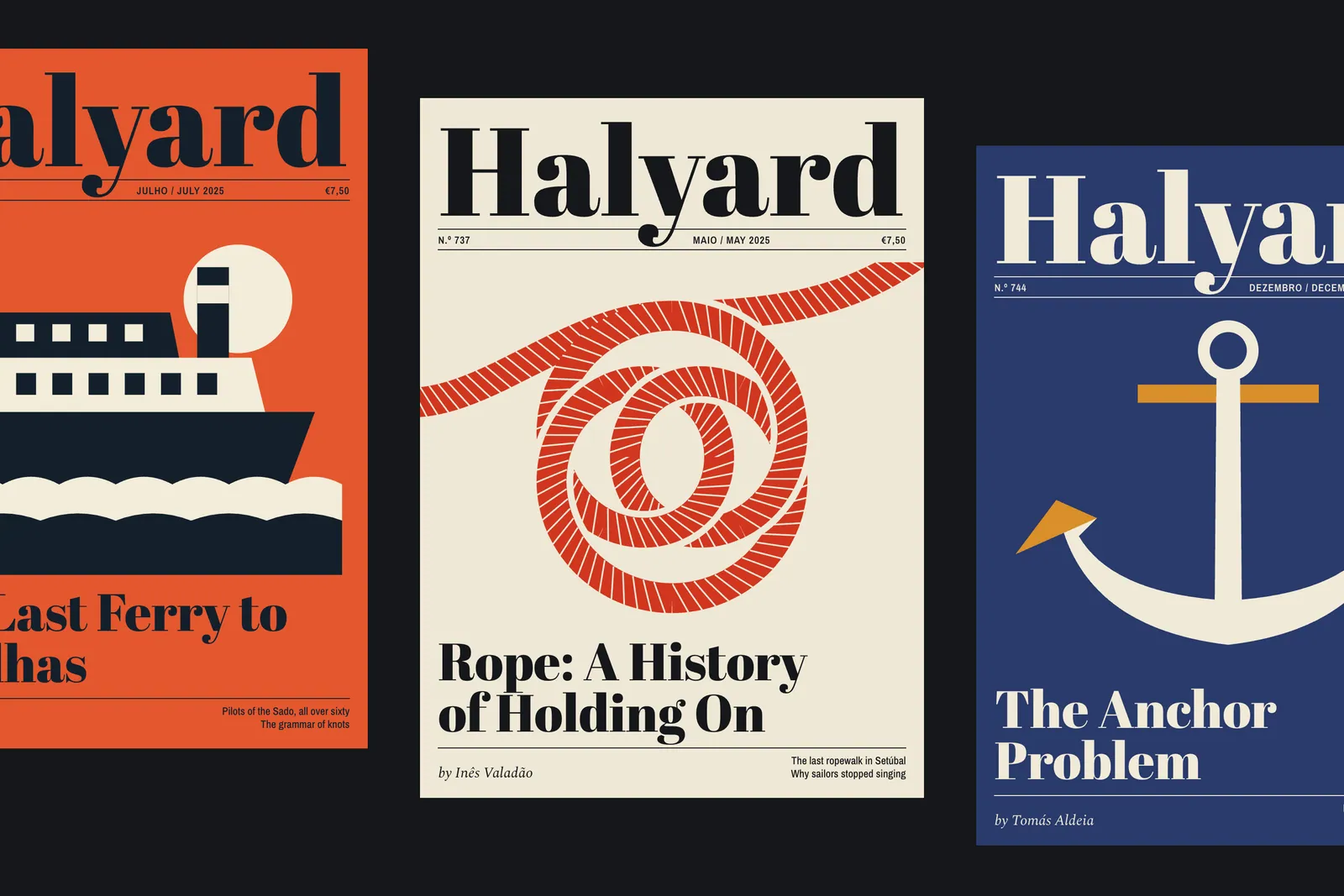
Three issues from the first year, each in black and one spot ink.
Halyard has come out every month since 1964, and by 2023 its subscribers were renewing out of loyalty alone. The new editor wanted a magazine that old readers would recognise and younger ones would pick up. The press, the paper and the eleven subeditors all had to stay, and there was no money for photographs. So the covers are now cut from paper with scissors.
Newsstand sales rose 18 percent in the first year while the print bill fell 6 percent.
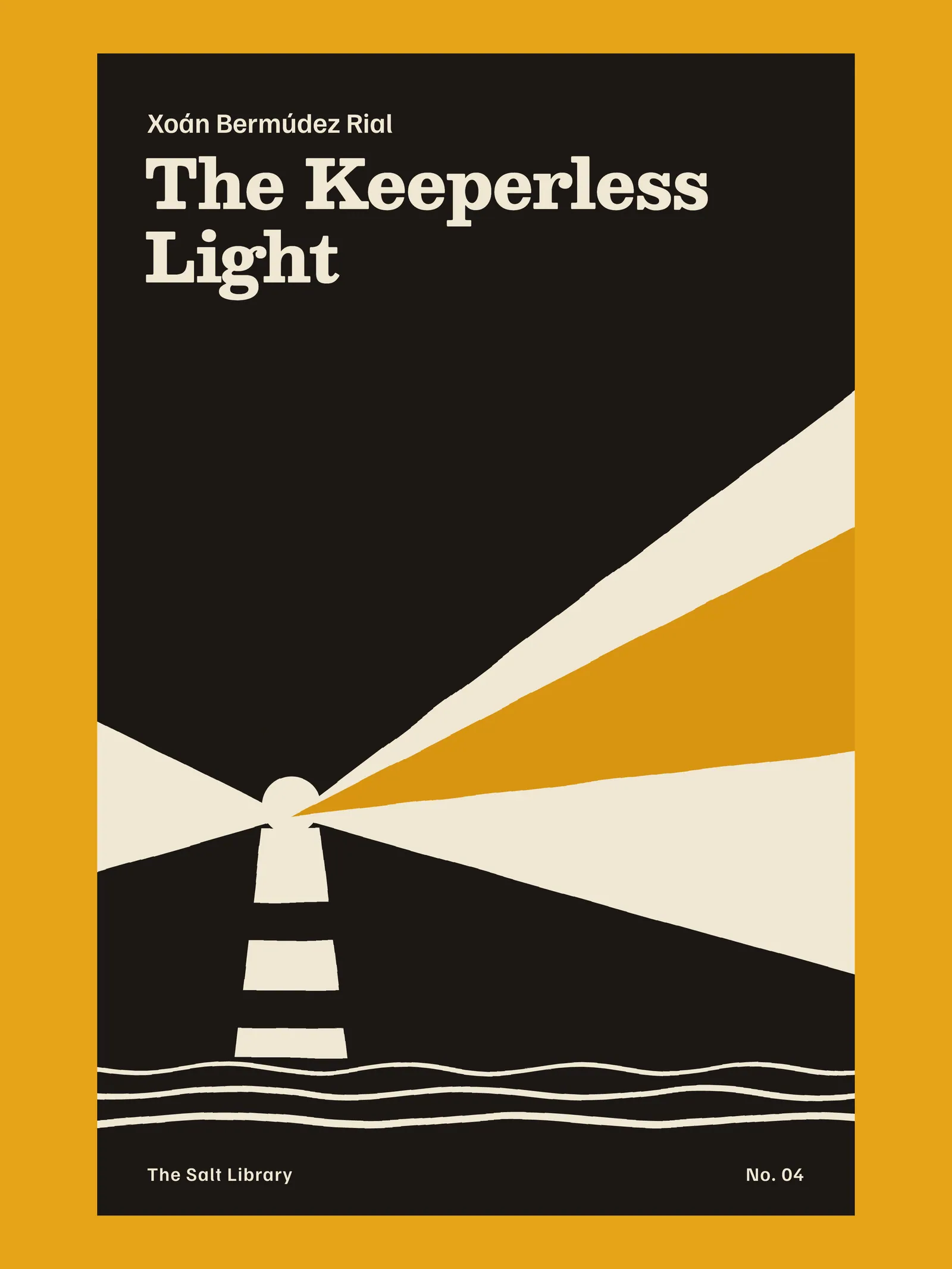
A three-person press in Setúbal needed its translated fiction to be seen across a bookshop, at about half the old cost of a jacket.
Ostra Press had found twelve mid-century novels nobody in English had read, and €0.38 a copy to dress them. That ruled out photography, lamination, and a third colour. So each jacket was cut from paper with a scalpel, printed in two spot inks on kraft or bone, and held to a type system strict enough to make twelve books read as one shelf from the far side of the shop.
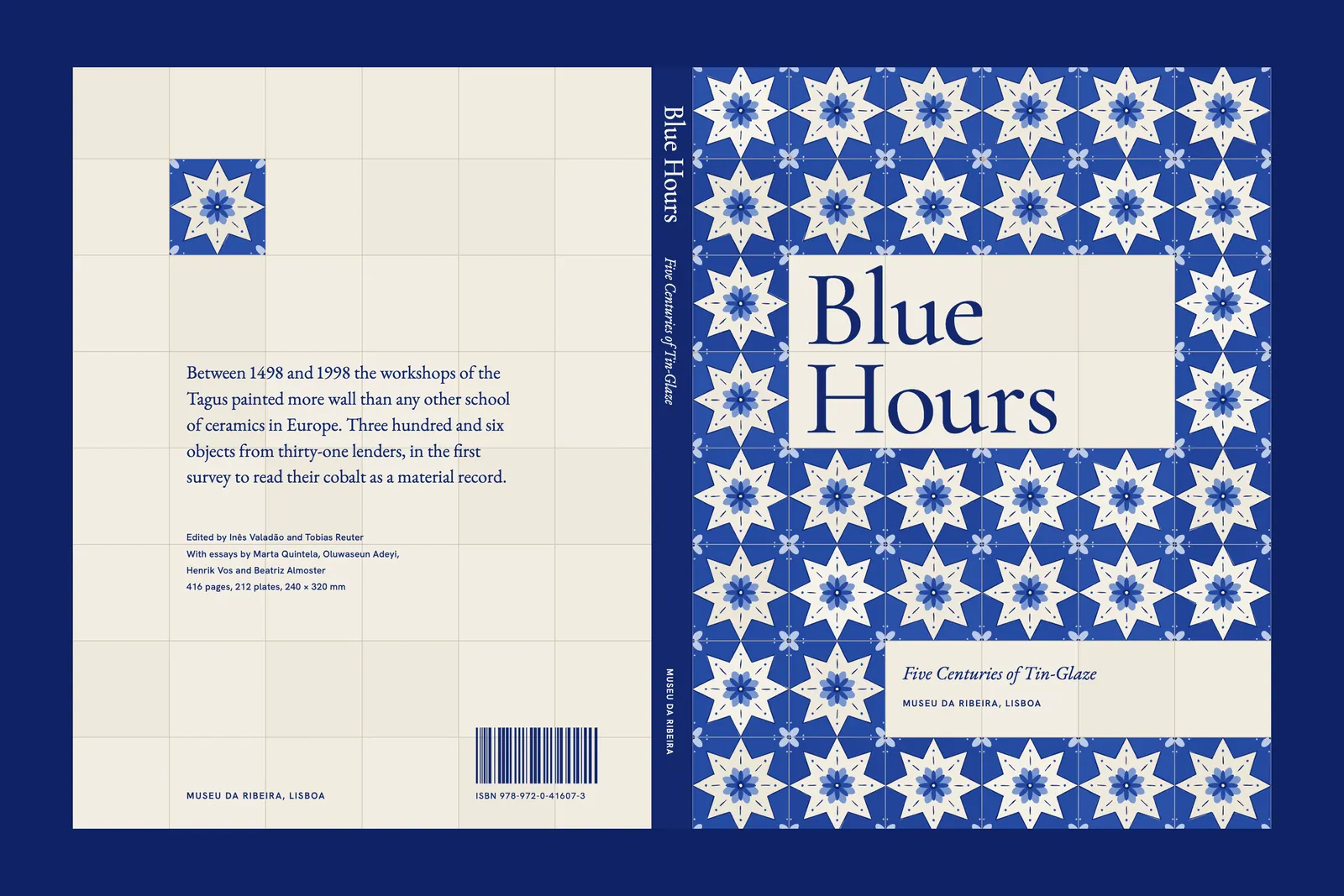
Four-colour process cannot print the blue of a Lisbon tile. It falls outside the gamut by a visible margin, and on matte paper the margin grows. The Museu da Ribeira wanted 212 plates that a conservator could hold against the wall. Eleven weeks before press, with five lenders still undecided, we started mixing ink at a printer’s in Almada at twenty to seven in the morning.
Museu da Ribeira, Lisbon, 2026. Continued on page 40
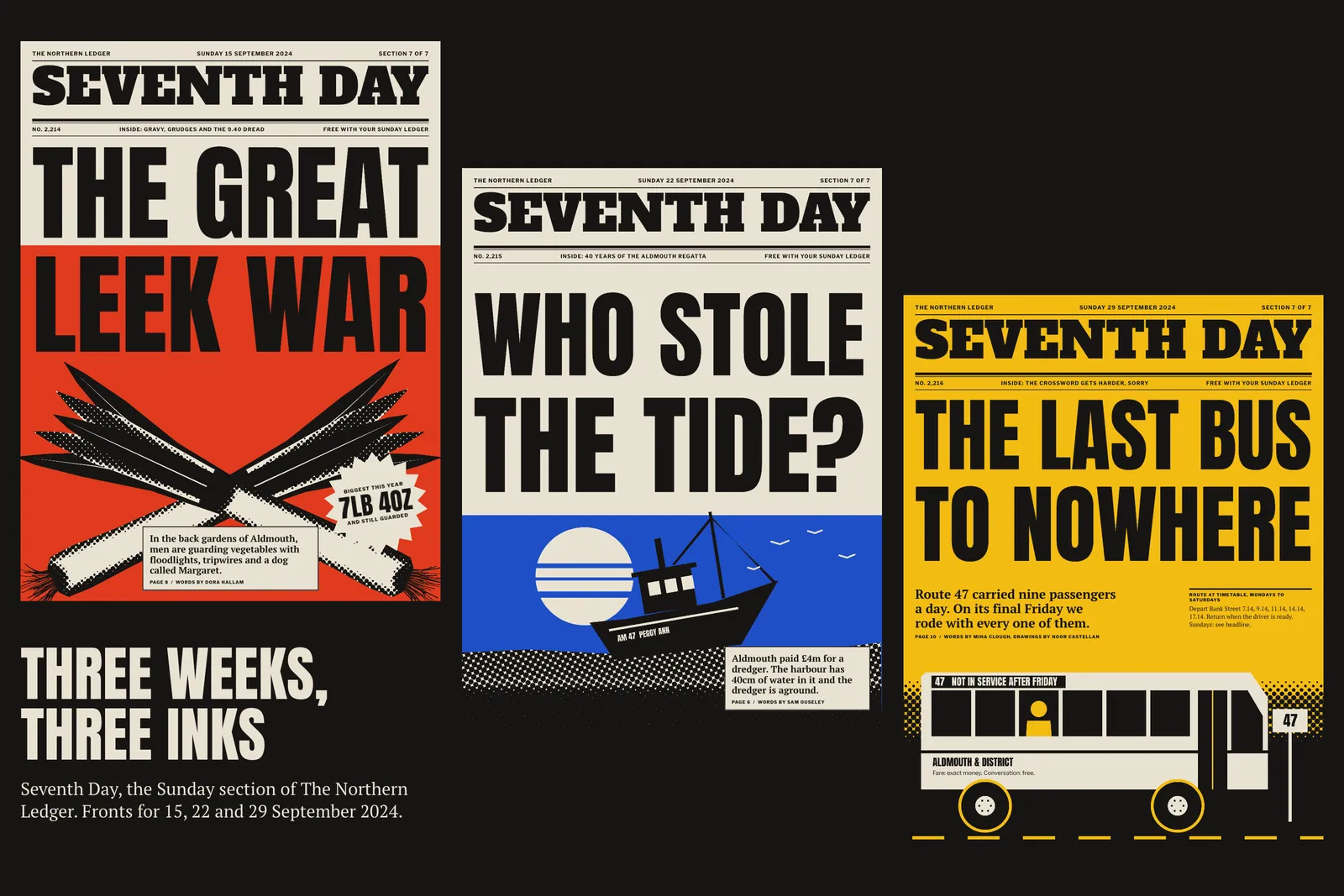
Most readers of The Northern Ledger opened its Sunday section from the back, if they opened it at all. The press could hold 40 lines an inch and one spot colour, editorial closed on Thursday and ads could land until Friday at four. So the redesign stopped hiding the newsprint. Wood-type headlines, one ink a week, drawings made for the dots, and every feature built three times.
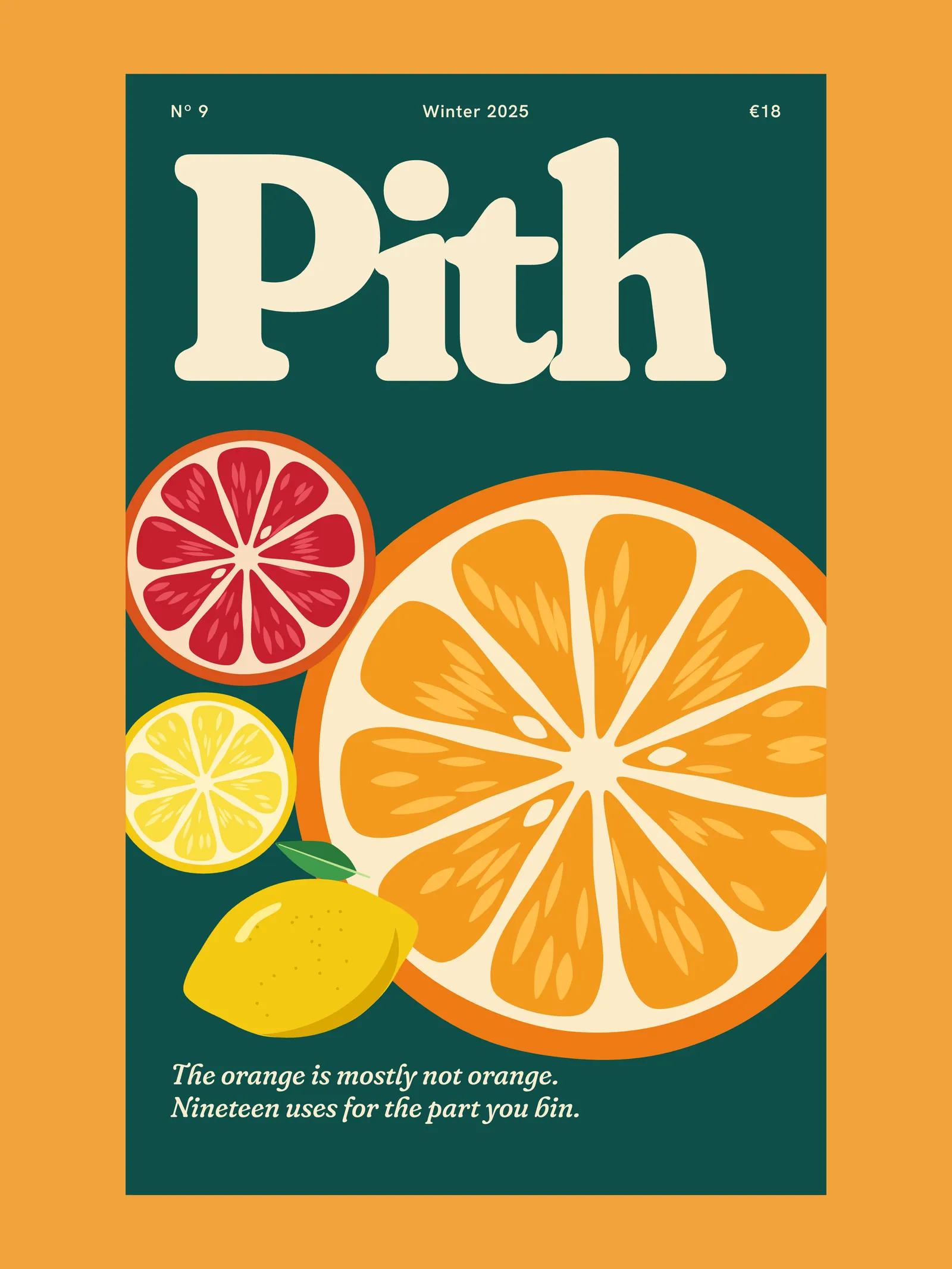
With no money for a single shoot, an independent Lisbon quarterly built twelve issues on scissors, spot ink and a recipe page you can read from the chopping board.
A food magazine lives on photographs, and one day of shooting in Lisbon cost more than Pith could spend on an entire issue. So there are none. Every tomato in the magazine is cut from paper, scanned and filled with spot ink, and every recipe is set large enough to read from a chopping board with flour on your hands. Twelve issues later the print run has more than tripled.
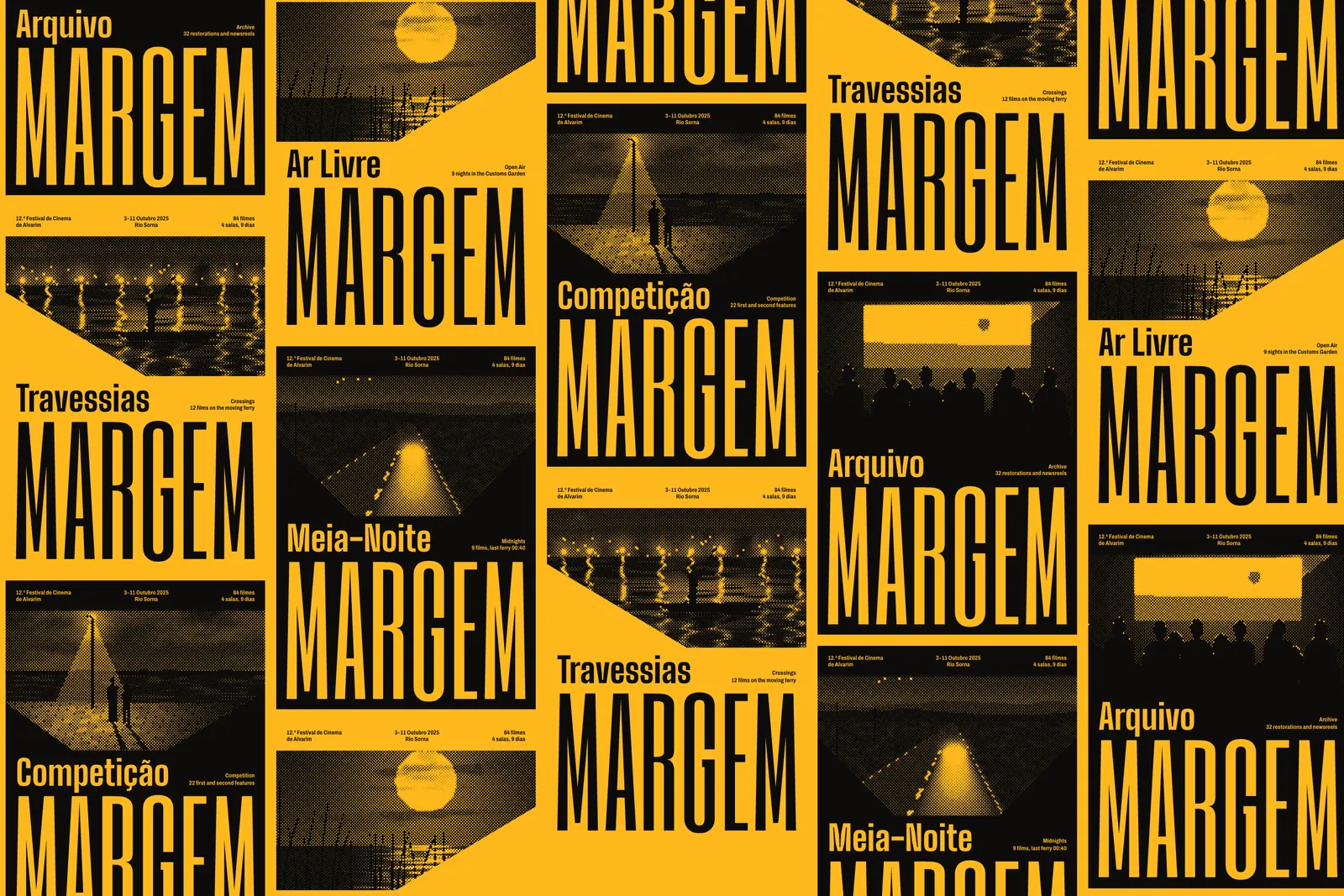
Margem runs nine days on the Rio Sorna, in a cinema, a grain store, a garden and a moving ferry. Most of its audience reads the programme standing outside at night, by the light of a phone. The twelfth edition asked for 84 films and 168 screenings in 96 pocket pages, set in a timetable that could change until 41 hours before the plates were made.
Margem, Festival de Cinema de Alvarim, 2025. Continued on page 90